You Need to Draw from a Reference
The advice for getting better at drawing usually skips a step. Practice every day, it says, and that part is fine — that part is true. What it leaves out is what to practice. Because there are two real modes for putting in time on the page. You can draw from reference — a photo, a model, a cast — and you can draw from imagination, constructing without looking. Both matter. Neither one alone teaches you to draw.
The two modes are not equally easy to start cold. The imagination side feels more like making art. It doesn't ask for a setup. You sit down with a pen, and what comes out feels at least vaguely yours. Reference work feels more like homework. Picking the image, opening it on a screen, finding a way to draw next to it — every part of that has a small friction the imagination side doesn't have. I don't really know what fraction of people lean which way — plenty of artists find imagination the harder side to start cold, not reference. What I can say is that for me, and for the people I've talked to about it, the side with the lower friction is the one that quietly wins on tired evenings, and the drawings end up smoother but quietly wrong in the same ways they were six months ago — on proportion, on weight, on the way light actually falls on a form.
So this is the case for protecting the half that needs help: reference drawing. Not at the expense of imagination work — both are real practice — but as the half you have to be deliberate about, because nothing makes it happen except deciding to.
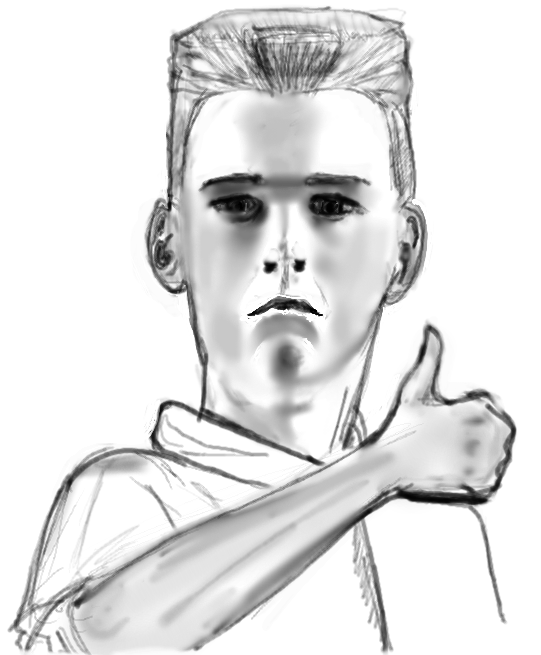
It's how every serious tradition has actually trained artists. When training was formal, the reference half was the bigger half. Renaissance apprentices spent years copying the master's drawings before they were trusted with original work. The 19th-century academic system made copying central to the curriculum — the Bargue Drawing Course was hundreds of carefully prepared plates that students could work through before moving toward more complex study. (Charles Bargue on Wikipedia) The atelier tradition that revived the academic method in the late 20th century kept the same shape: cast drawing first, plates first, the model later, original composition much later. The pattern is consistent across centuries and styles. Reference work first, in volume, before invention. There is a reason so many traditions land close to the same answer.
It's how you actually learn to see. Betty Edwards' Drawing on the Right Side of the Brain makes this case carefully — drawing is the trained act of looking at a thing and rendering what is actually there, not what your brain's symbol library says is there. (Drawing on the Right Side of the Brain on Wikipedia) The seeing is the skill. The hand follows. And the seeing only gets trained when there is a real thing to measure your line against — when you put a line down and then look up and notice it is in the wrong place. Imagination drawing without that calibration is mostly rehearsal of your existing symbol library. You don't get better at drawing a hand; you get smoother at drawing the idea of a hand you already had.
It's what makes imagination drawing worth anything later. The illustrators who can invent fluently from imagination — pose a figure, foreshorten a shoulder, place a foot on the ground convincingly — are running on years of internalized observation. Andrew Loomis built his whole instructional approach around this. (Andrew Loomis on Wikipedia) His books teach constructive drawing from imagination, and they teach it grounded in life work and reference study, not as a substitute for them. The imagination half is not a separate path that lets you skip looking at things. It is the side of practice that uses the visual library the reference half built. Cut the reference work and the imagination side eventually runs out of fuel to draw on.
There is a fourth reason that belongs in this list but I've written it out separately, so I won't restate it here: the friction problem. Of the two modes, reference work is the one that asks for a setup, and on tired evenings the half that asks for a setup is the half that quietly skips. That argument is general to daily drawing practice and the full version is in The Setup Tax. It falls especially heavily on the reference half — which is the case this article is making.
That is the case DrawTheDraw is built around. It is a reference-first tool: you point it at a folder of your own references, you choose gesture mode or drawing mode, you pick how long per image, and you start. The reference and your canvas sit side by side. You draw with Ink, Pencil, or Airbrush, and afterwards you can review what you made against the originals. I'm developing it further from there.
If you think this kind of tool could help you, have a look — there is a free demo on itch.